What happens when “just asking questions” meets a complete lack of curiosity about the answers? Welcome to the latest box-ticking exercise from the ABC, which ran a feature story recently suggesting that a Bureau of Meteorology temperature record in southern Victoria might not stack up — not on the basis of competing data, but because a local bloke reckons it just doesn’t feel right. In the grand scheme of climate reporting, it’s a small story, admits Chris Graham. But it speaks to a much bigger problem.
If you’ve ever worked in media or politics, then you’ll likely be familiar with the phrase, “Opinions are like arseholes. Everybody has one.” As an editor, I like to add the rider “…but that doesn’t mean they should necessarily be shared in public”.
Not to kink shame, but online porn is arguably the most appropriate place for that. But so, it turns out, is the ABC, where that phrase was ringing loudly in my ears recently after an article popped to the top of my Apple Newsfeed: ‘Bureau of Meteorology says Warrnambool recorded its hottest day ever but locals aren’t convinced’.
Sigh. And you thought it was just Rupert who published populist science-denying guff. Over to Aunty for the ‘story’.
If Keith Prest had a magic wand, the kite surfer from Victoria’s south-west knows exactly what he would conjure into existence. “I’d wish for an official weather station in central Warrnambool in a position that truly reflects the weather,” he said.
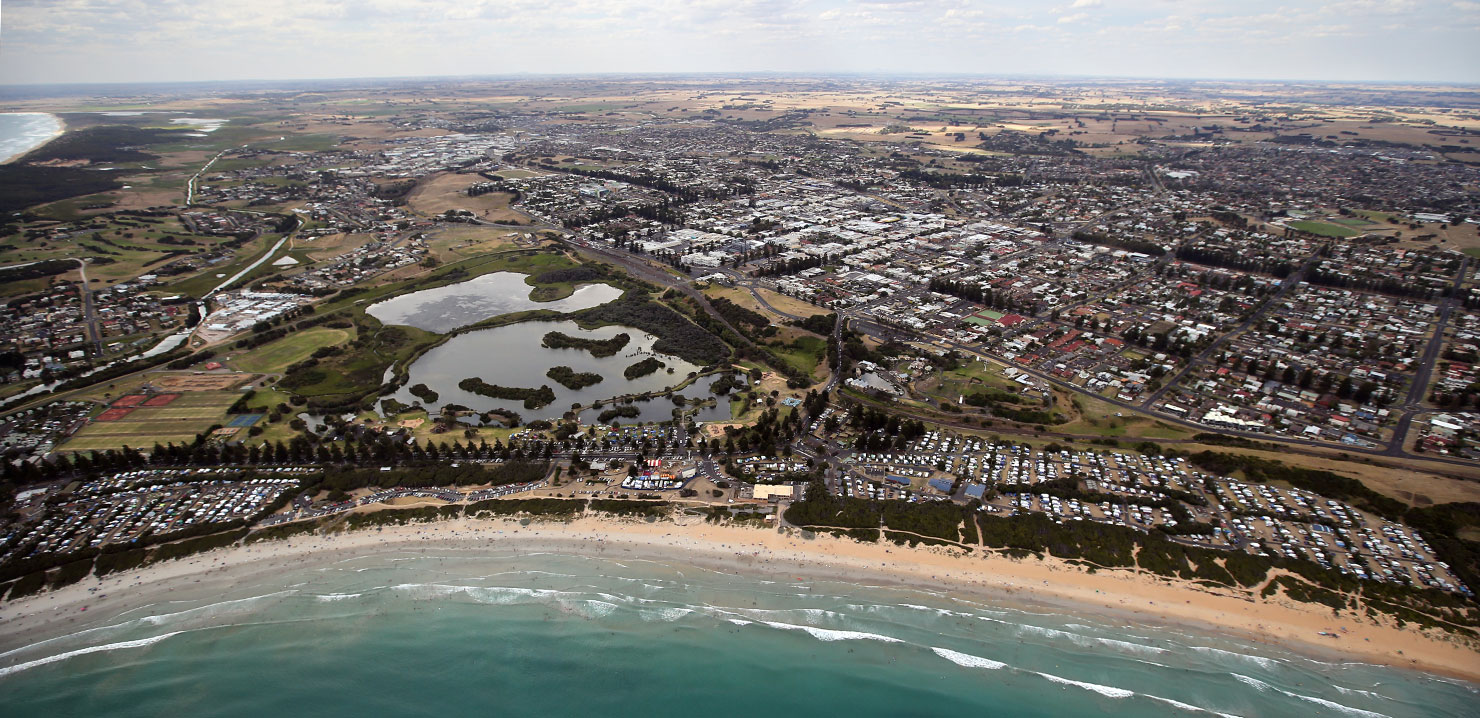
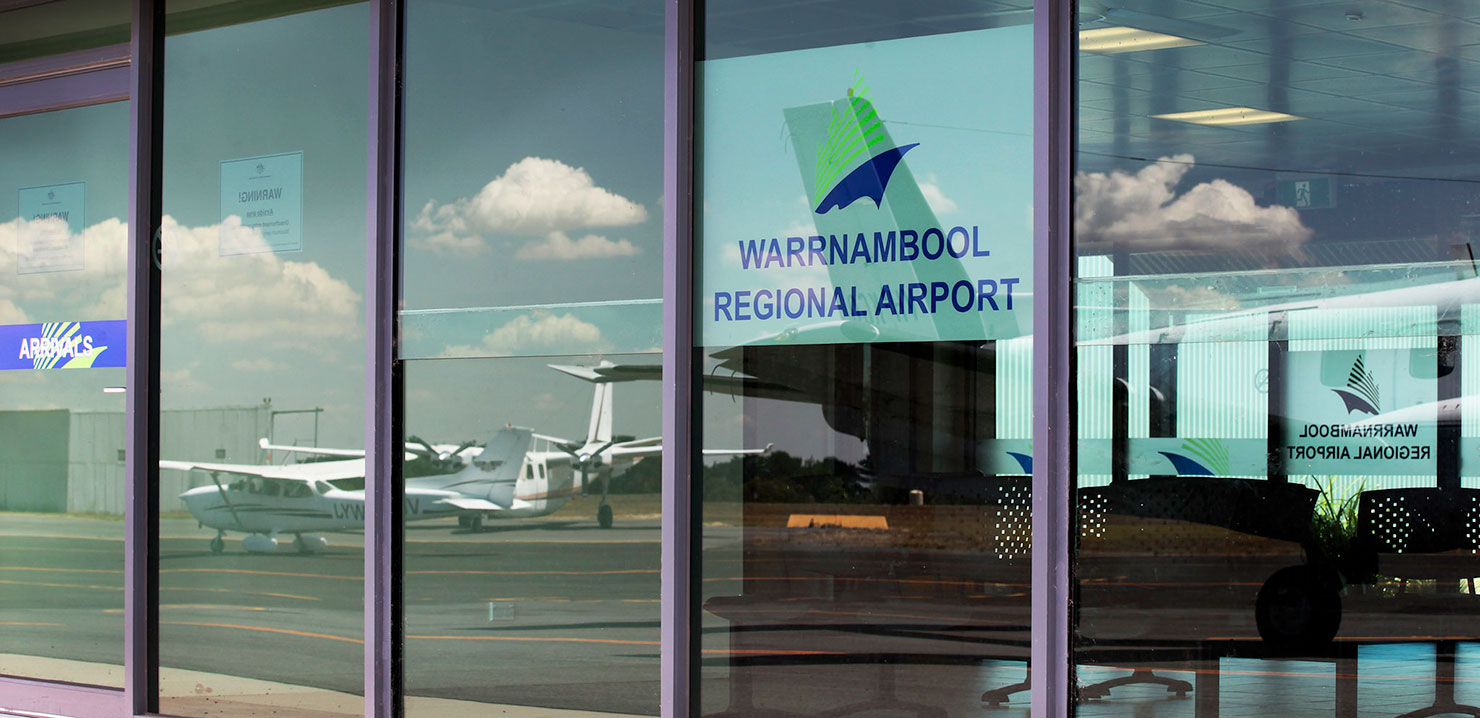
The Bureau of Meteorology’s (BOM) weather station recorded its hottest day ever for the regional centre during last month’s heatwave, with temperatures surging to 45 degrees Celsius on January 27. However, the weather station is located at the local airport, more than 10 kilometres inland and in a different municipality from the notoriously windy coastal city that’s home to 30,000 people.
Data from other private weather stations closer to Warrnambool’s coast indicate the temperature did not budge past 38C.
This point in the story would have been an opportune moment for the journalist to publish that “data from other private weather stations”… because, you know, journalism. Alas, it never emerges. Instead, the article bravely blunders on:
Mr Prest said he did not dispute the BOM station’s accuracy for where it was located, but that the weather in town was often much cooler, mainly due to sea breezes coming off the Southern Ocean.
The local of 40 years said this was one of his pet peeves when watching the weather on the nightly television news. “I find it incredibly frustrating when the high in Warrnambool has been put down as some figure which I know has not happened in the town,” Mr Prest said.
In case you missed it, the core of Mr Prest’s issue appears to be that back in the good old days, there was a weather station in the Warrnambool town proper, right smack bang in the main street. And then some bureaucrat (probably from Canberra) decided to move it… because he doesn’t know what locals know. Here’s how the ABC journalist responsible for this train wreck, Jean Bell, summarizes it:
BOM records show a weather station was located at Warrnambool’s post office for 86 years before it closed in 1983. The weather station at the airport was opened that [same]year.
I’ve got some good news for Mr Prest, and some bad news. The good news is that after reading this article, he’ll be able watch the ABC weather report without having to endure ‘one of his pet peeves’. The bad news is, it’s going to be a little embarrassing getting there.
Local knowledge doesn’t trump science
I’ll cut to the chase: the temperatures recorded today at the Warrnambool Airport (10km out of town) are basically identical to the temperatures recorded at the Warrnambool Post Office (in town) three decades ago.
It took me all of about 20 minutes to confirm this via the BOM website: One minute to locate the “BOM records” that the ABC journalist Ms Bell references above (you can get it yourself here), and then about 19 minutes to crunch that data through Excel, to get the appropriate averages. Here are the results:
From 1956 to 1982 – a period covering the last 27 years of available data from the Warrnambool Post Office weather station situated in town – the average annual temperature recorded was 18.7°C.
From 1999 to 2025 – 27 years of the most recent data from the Warrnambool Airport weather station situated outside town – the average annual temperature was 19.0°C.
So, the Warrnambool Airport site situated out of town is recording marginally warmer temps than its predecessor in town – an increase of 0.3°C. But that’s simply evidence of global warming, not local difference. There’s been a general warming in Australia of about 1.3°C since the early 1900s… or in the words of the BOM, “Data shows that Australia has warmed by over one degree since 1910. The warming has occurred mostly since 1950”.
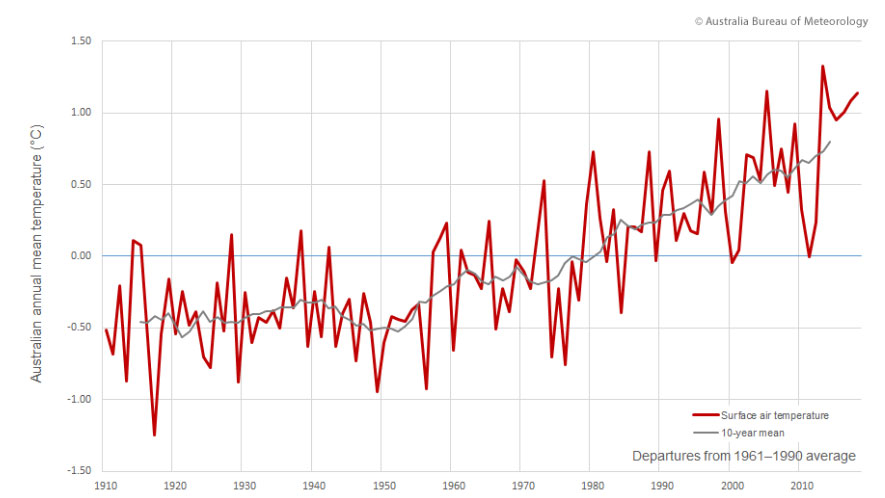
Obviously, the 0.3°C difference is not only within that range, it’s actually slightly lower than you might expect to see. So, if anything, the data suggests that the weather station at Warrnambool Airport is recording temperatures slightly lower than it might if it were located at the local Post Office today. Indeed, the hottest year recorded in the data (19.8°C) was in 1981… at the Post Office, not the Airport.
Here’s a graph that puts all that into pretty shapes, to make for simpler viewing.
Long story short, the Warrnambool Airport absolutely does not record wildly different (or even slightly different) temperatures to the old weather station situated in the centre of town.
It’s simply a local myth.
Who gives a sh*t?
You might think this is a relatively benign problem. It isn’t. Every journalist knows (or should know) that the BOM keeps a significant quantity of searchable data online. And we know that Ms Bell knows, because she specifically references it in her story… “BOM records show a weather station was located at Warrnambool’s post office for 86 years before it closed in 1983.”
So, given she’s writing about that data it begs the obvious question, why didn’t she check it? The answer is a two-parter: 1. Because that would require research; and 2. Because if she had, she would have had to spike the story.
Even better question: Why didn’t any one of the half dozen or so sub-editors/editors involved in this story going to press check it? Or more bluntly, why didn’t anyone at the ABC read the story, then leap to the obvious conclusion: The central claim in the story – that the BOM is wrong – is probably nonsense, but it’s easily checked?
The reason is more complex. One of the really outstanding things about the ABC is that it’s so well represented in regional and remote Australia – there are 56 regional offices located around the country, and that helps ensure that folks who otherwise might be forgotten have better access to a voice. Sure, those voices are still routinely ignored by government, but that’s not the ABC’s fault.
But one of the more insidious things that has crept into the ABC’s reporting over the last decade or so, particularly, I’ve noticed, since COVID, is a tendency to give space to opinions on issues that don’t actually lend themselves to opinions. I’m referring, of course, to science-based issues, which should never be subject to ‘he said, she said/opinion reporting’ unless he or she is a scientist whose done the actual science.
It’s a particularly insipid style of reporting. I call it the ‘Do You Own Research Gambit’, which in this case is obviously deeply ironic… because it ordinarily involves ‘doing your own research’ and coming to completely the wrong conclusion. But on this occasion, the ABC and Mr Prest came to the wrong conclusion after obviously doing zero research.
I acknowledge Mr Prest is “a [Warrnambool] local of 40 years”, but that no more qualifies him to speak as a meteorologist than it should empower a junkie to dispense drugs at the local chemist. Put more bluntly, if the ABC is going to publish ‘junk science’ like the story above, then they should be forced to include a caveat warning readers that, ‘This opinion on a scientific issue is not scientific, and in fact diverges wildly from the opinions of experienced scientists with access to more than a century of data… but here it is anyway’.
How did we get here?
The ABC has been locked in an epic struggle to try and appear ‘less elitist, more relatable’ to the average Aussie punter for a long time now, and the way many ABC journalists get there is by publishing nonsense like that above.
Joe Bloggs The Hyper-Local has an opinion on an important scientific issue. Let’s hear what Joe Bloggs has to say.
Local amplified. Relatable box ticked.
The problem is, in doing so the ABC is engaging that age -old Australian tall-poppy pursuit of undermining the experts. Which is even more ironic, when you consider how the ABC responds to exactly the same assault on its own expertise.
The link I provided above to the ABC’s 56 regional offices actually takes you to a lengthy statement published last year by the ABC’s managing director, Kim Williams. It runs to more than 1,000 words and in it, Williams mounts a spirited defence of the ABC from yet another ho hum hatchet job from News Corp claiming that the ABC is wasting taxpayer money, and represents terrible value for money.
Obviously, the ABC represents excellent value for money, but turns out Aunty also gets quite defensive when other large organisations seek to undermine its functions and expertise? Go figure.
The last word
Finally, there’s a paragraph at the end of the ABC story that should have triggered the sub-editors to, at the very least, put the story on hold while someone made a simple phone call, or crunched some data themselves.
“A BOM spokesperson said there were no plans to move the weather station and that it fitted the bill for the area’s requirements. The spokesperson said the monitoring network along the south-west coast, including Warrnambool’s inland site, met World Meteorological Organization requirements for global weather models.”
That’s a lot more polite than I would have been if I were a spin doctor for the BOM, and an ABC journalist asked me for comment for a story on ‘Keith from Warrnambool’ who was frustrated by the BOM’s apparent inability to get the science right for three decades. Indeed, my response would have been more along the lines of:
“It’s so refreshing that local residents are taking such a strong interest in a scientific issue like climate data. And it’s especially encouraging that the ABC is using taxpayer’s funds to allow those residents significant space to provide their colourful, uninformed opinions on it.
“Unfortunately, ‘being a local of 40 years’ is not a recognised part of the scientific process, and it would be an unwise use of taxpayer funds for us to rely on gut instinct and perceived local knowledge to record and predict weather.
“So, for now, we’re going to keep the weather station where it is, and continue to do the job for which our scientists are highly trained, and which we’ve been doing successfully for well over a century.
“Of course, if people would prefer to get their weather directly from ‘Keith from Warrnambool and others’ instead, tune into the arseholes at your local ABC.”
Donate To New Matilda
New Matilda is a small, independent media outlet. We survive through reader contributions, and never losing a lawsuit. If you got something from this article, giving something back helps us to continue speaking truth to power. Every little bit counts.