In Australia, we’ve built an economy that cuts off our nose to spite our face — or, more politely, one that relies on exporting the fossil fuels driving climate change to pay for our imports and our appetite for expensive things. It works, right up until it doesn’t. And when it cracks, as a small war on the other side of the planet has just reminded us, we’re forced to confront just how exposed we’ve left ourselves. Geoff Russell weighs in.
Watching any commercial evening news, you’d swear that AFL, and gossip about AFL players, is news. I don’t mind AFL in the sports section, because that’s what the sports section is for. But when some overpaid child gets drunk and behaves like a moron, and it leads the news, then I get annoyed.
And the tribunals? Since when are their deliberations news? But as a member of a political party, I feel compelled to watch one or other TV news channel to understand better what the voting public is being fed. Typically, about 50 percent of TV news… isn’t.
And then… wham, something happens to thrust everybody’s nose against a window into the operations of the real world. The big stuff that matters. The stuff that nobody thinks about until it’s broken.
The wham, of course, resulted from a war of choice by an impatient, infantile man-child, which caused a blockade of a narrow Strait thousands of kilometres away; the Strait of Hormuz.

As is our way, Australia mostly slept through the first quarter, the one with the bombings and the deaths of leaders and school children. But then we realised that we actually had skin in the game. Because all of us, every hour of every day, depend on the workings of the global energy system. We all have a standing wager on its continued operation. Maybe they need to put a clause to that effect in the SportsBet fine print.
“By using this service you hereby agree to put half of all wagers on the continued operation of the global gas, oil and fertiliser supply chains through the Strait of Hormuz. And if you don’t bet, we will garnish your wages and place the bets for you.”.
Somehow, we are involved even if we don’t remember making the bet.
The state of the world’s energy supply
Perhaps you recall signing up for solar panel feed-in tariffs of 44 cents per kWh in 2008 in South Australia; and soon after in other states. If you did, you may now be under the impression that Australia is a solar superpower and thereby insulated from anything that happens in those even-sunnier-than-us equatorial kingdoms.
We aren’t. While we were all busy watching the footy junk-news, and playing with our phones, huge changes were underway, here and elsewhere.
Here’s the chart that gives a clue into the operations of the real Australia in the real world; the operations that TV news services so assiduously ignore.
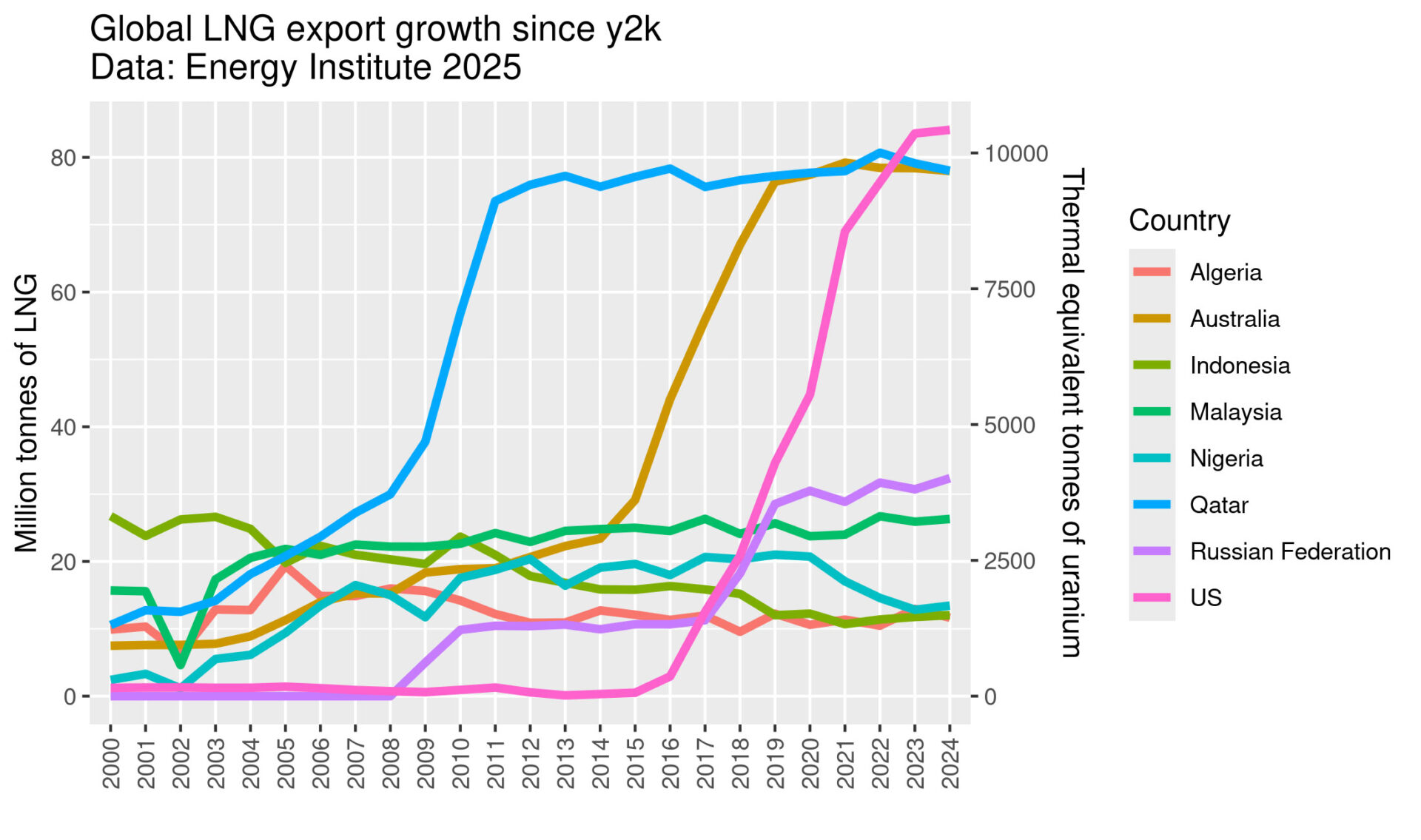
This single chart contains a wealth of information. But, unless you’re an energy nerd, you’ll need some context.
Focus on the blue line and the left axis. The blue line shows the rise in millions of tonnes per year of LNG (Liquefied Natural Gas) from Qatar; a tiny country of about 3 million people, sitting rather near the top of a massive bubble of gas; natural gas. This name is just a wonderful marketing moniker for methane, a potent greenhouse gas traps around 30 times more heat than carbon dioxide over a century—and more than 80 times as much in the short term.
Qatar was the first LNG superpower. Ramping up from about 2003, its LNG output hit about 70 million tonnes a year by 2011. Australia was next (follow the brown curve) hitting over 70 million tonnes a year by 2019. Then came the US. Massive LNG export hubs take 5-10 years to build and cost tens of billions of dollars. Which makes them rather like nuclear power plants, but without such strong opposition from the people who cry loudest about protecting the climate and who reckon nuclear plants cost too much.
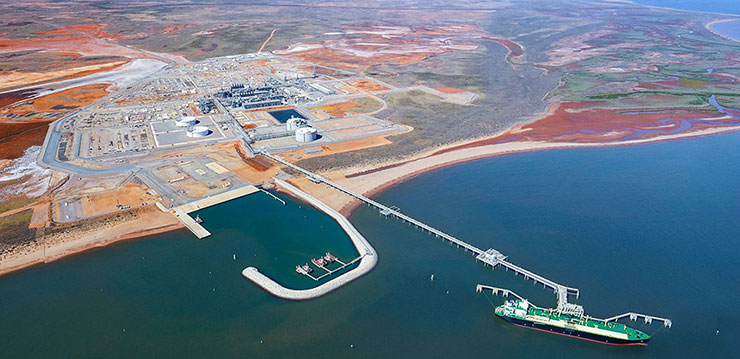
The Wheatstone LNG hub in WA cost about $30 billion, and took seven years to build. They even carefully translocated 30,000 animals from the site during the construction.
Import hubs, on the other hand, are much simpler, and Germany has been building them en-masse since it stopped using Russian piped gas after the invasion of Ukraine.
But who on earth has a deep understanding of the scale of the output from an LNG hub? What does a number like “75 million tonnes” of LNG mean? Far more people know how footy tribunals work.
Here’s a comparison. Australia has 37 gigawatts (GW) of solar panels (a gigawatt is a thousand million watts. It’s a unit of power, not energy. Supply one gigawatt for one hour and you have one gigawatt-hour of energy).
How many gigawatts of panels would it take to generate the same energy as 75 million tonnes of LNG? About 174 GW, almost five times the total installed base of photovoltaic (PV) panels in the country.
Let those numbers settle and percolate.
Note that all the growth in LNG came well after Australia had accepted the need to decarbonise, with the signing of the Kyoto Protocol in 1997. There was and is a carbon-free alternative to developing LNG; just mine and export uranium. But the anti-nuclear movement, which included large parts of both major parties as well as the Greens, made that impossible; and continues to oppose any expansion of green energy when that energy comes from uranium.
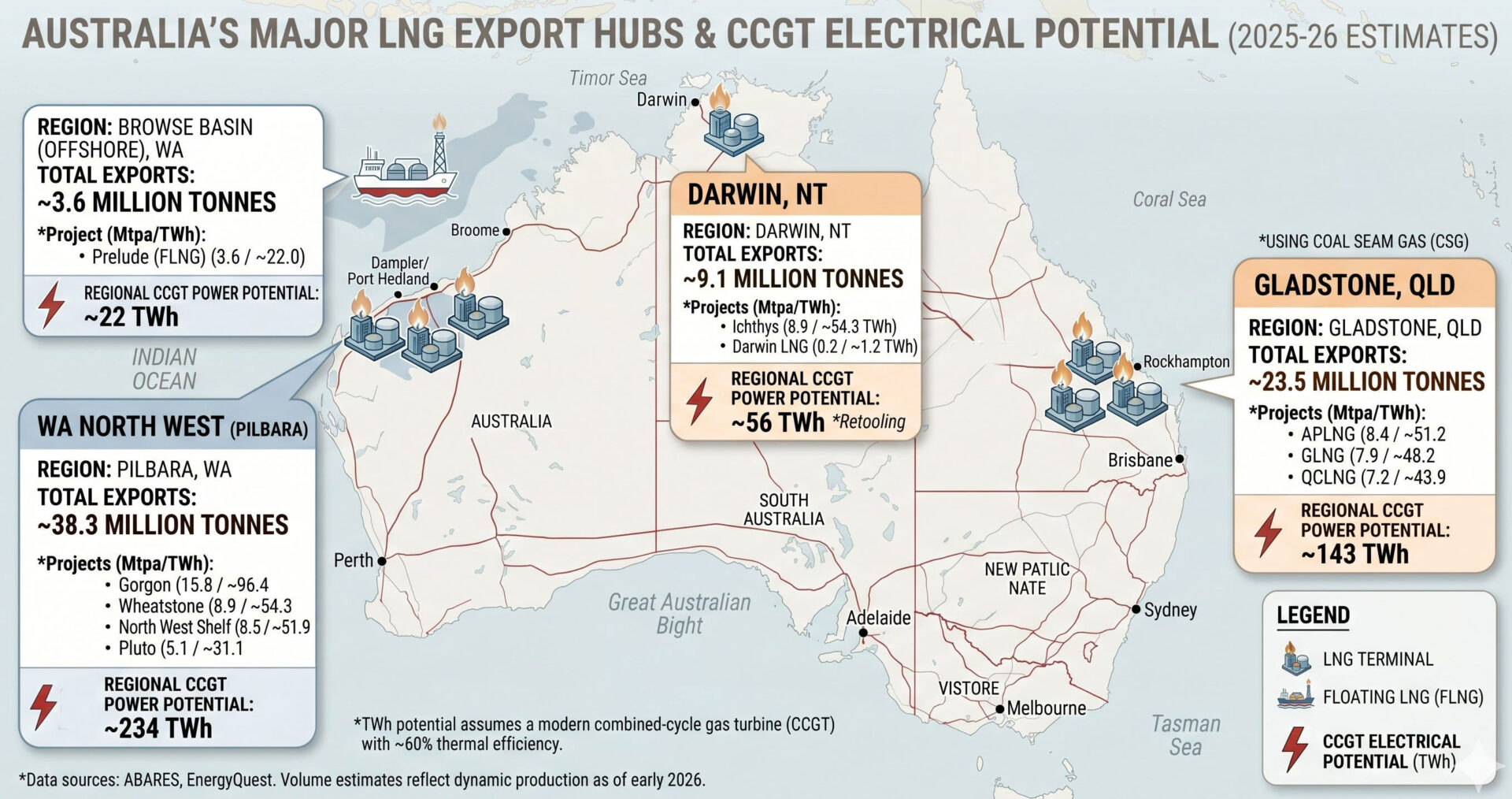
Having signed Kyoto, we could have chosen to build 10 nuclear plants, with perhaps 20 reactors, all providing dispatchable carbon-free electricity. Instead, thanks to the anti-nuclear lobby, our politicians chose to allow the development of 10 LNG export terminals exporting fossil fuels. That’s a more spectacular ALP/Greens/Australian Conservation Foundation/TAI own goal than you’ll ever see in any code of footy.
I’ll deal later with the mechanics of what could have happened if people chose science and rationality over tribal identity and radiation mumbo jumbo during this period.
When people tell me the growth of wind and solar has been fast… I try to be polite, I try to remember that stuff like this isn’t normally covered in popular news services.
Natural gas isn’t just about electricity and LNG
Let’s step back and cover the nuts and bolts of how it all works. Plenty of people seem to know how footy tribunals work, but these bodies could disappear tomorrow; no one would suffer or die. But shut down natural gas production and a gas shortage quickly becomes a fertiliser shortage and then a food shortage and, literally, billions of people are in trouble.
Shut down LNG and the blackouts would be large and long lasting.
Someone who knows about this stuff said on an Economist podcast recently that fertiliser and food shortages have killed more people since 2022 than have died on the battlefield in Ukraine. Unsurprisingly, most of them were in Africa, which kind of explains why these deaths don’t outrank events in the footy world on the evening news.
Natural gas is normally delivered via pipes. But how do you transport it internationally? By very long pipes. Transporting any gas is diabolical. But turn it into a liquid and it gets easier.
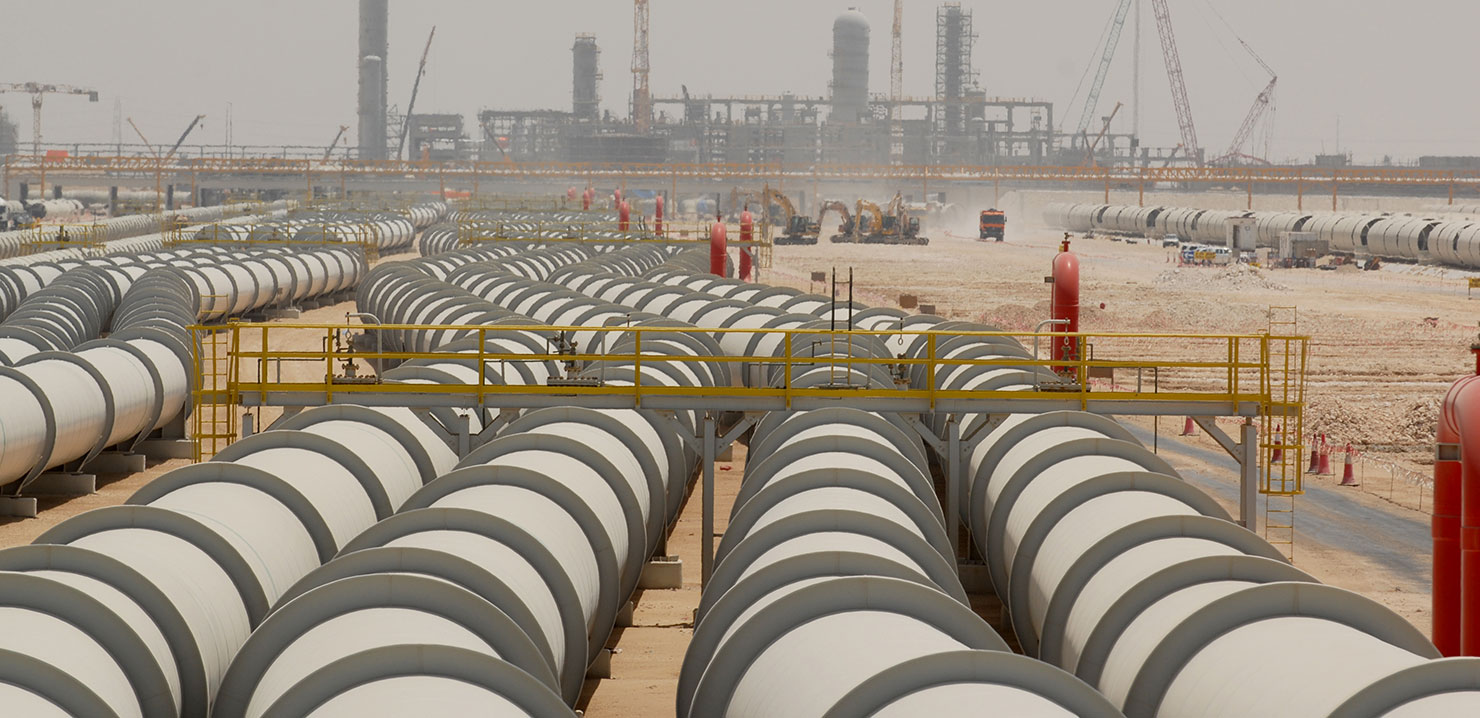
So, to make LNG, you cool your methane (remember natural gas is just methane) down to minus 160°C. When you cool it, it becomes a liquid and takes up far less room, so you can stick it into LNG tankers and send it anywhere. When it arrives at its destination, you heat it up and stick it in a pipe to its destination. This wastes about 10-20 per cent of the gas, mostly during the first cooling process. But if you aren’t near a pipeline, then very expensive gas is still better than no gas.
It’s worth noting that the LNG trade – the stuff cooled and shipped – is only about 13% of natural gas consumption.
Australia exported about 75 million tonnes of LNG in 2024. You can see that the export amount has been relatively stable since 2019. Use that 75 million tonnes of gas to drive a turbine and generate electricity, and you’ll get about 470 terawatt-hours worth of electricity. That’s about double the electricity we consumed in Australia during a year.
We also exported millions of tonnes of coal. In energy terms, the amount of coal we exported is about double that of the LNG. Burn it for electricity production, and it would generate about four times the amount of electricity that we use annually.
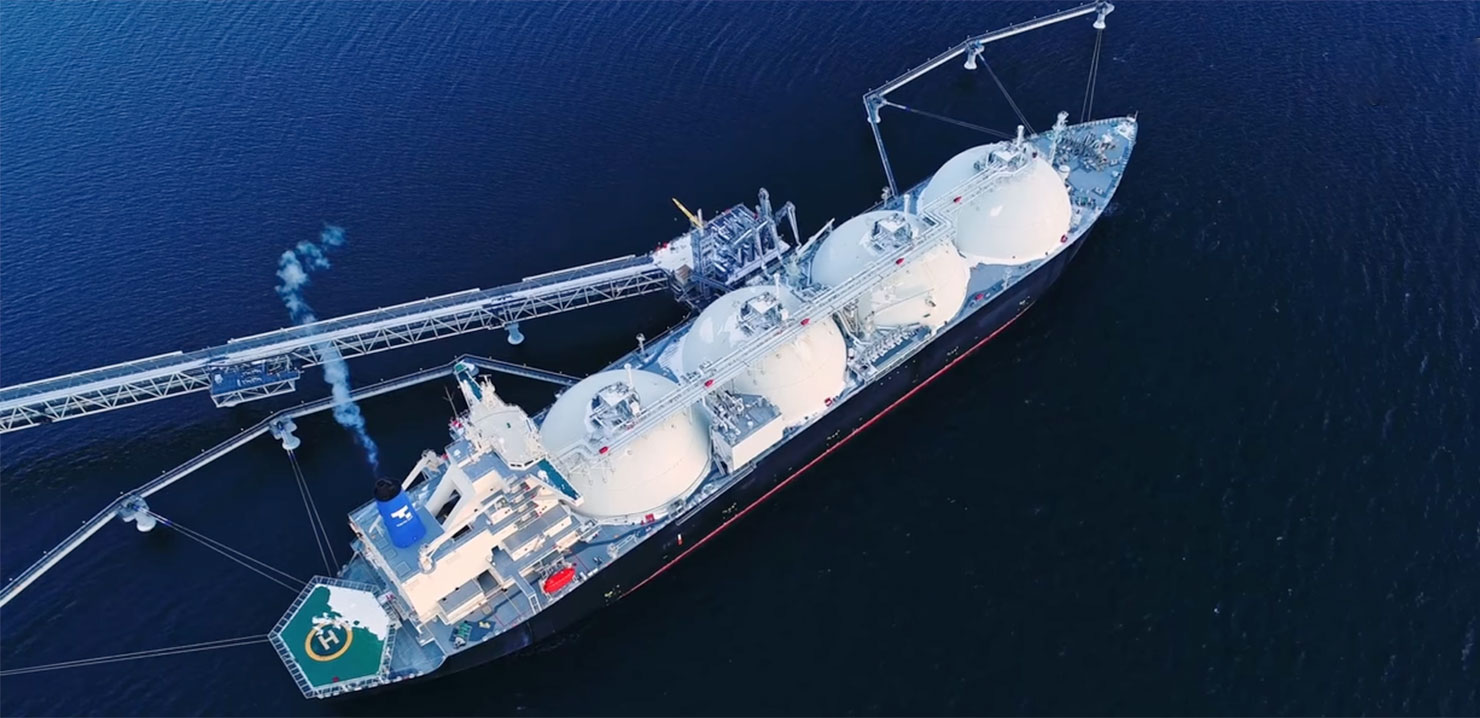
To move LNG, you need plenty of those (very special) tankers. These LNG tankers, as I implied earlier, aren’t like oil tankers, which mainly just have to float. LNG tankers are astonishing engineering; YouTube it.
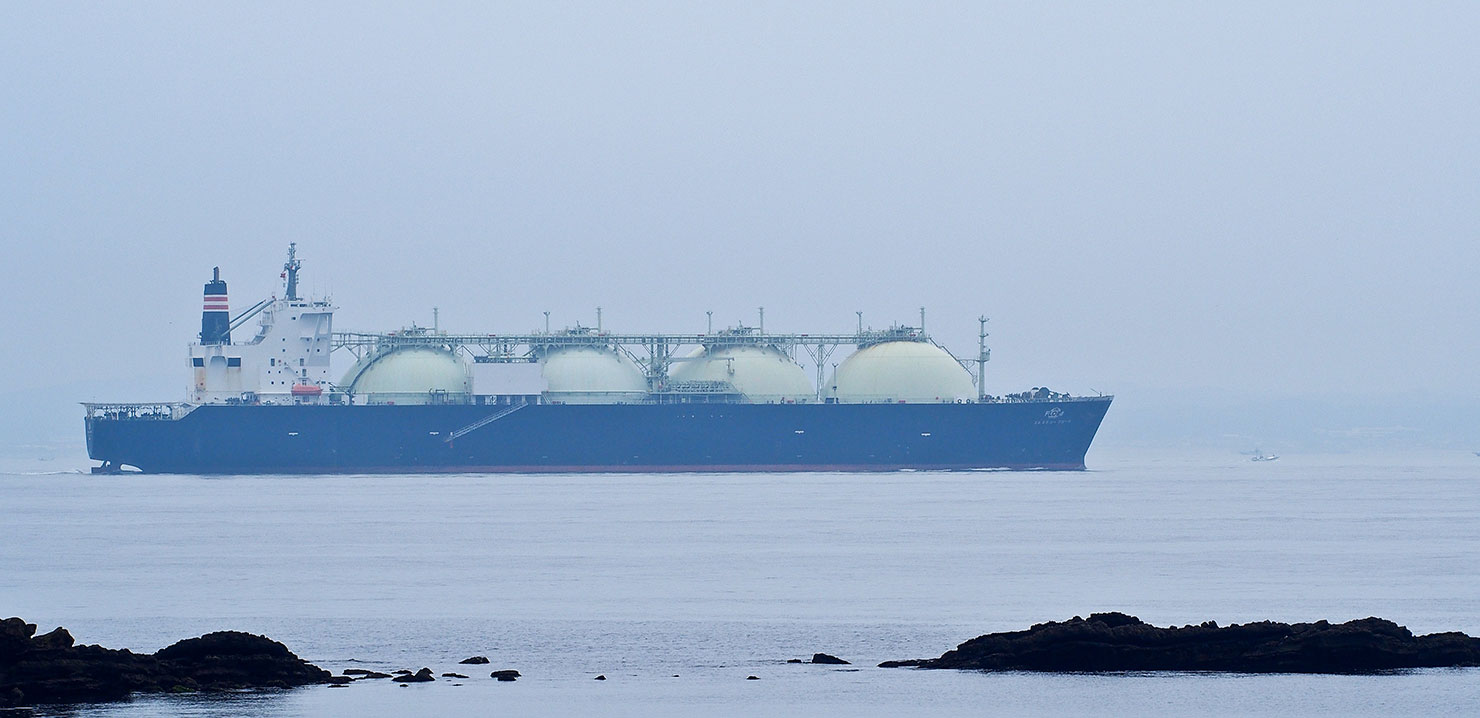
We send about 1,200 tanker loads per year, just over three per day.
I should note in passing that if we were to switch from shipping LNG to shipping ammonia, made using hydrogen and nitrogen in a process powered by wind and solar farms, then we’d need about three times the number of tanker loads; nine per day. This would be a low-carbon alternative. At a global scale, it would require tripling the LNG tanker fleet and driving up the price while dropping the (already low) efficiency. There are globally about 11,000 oil tankers, but only about 900 LNG tankers.
How else could we export that much energy?
Let’s first ask why. Why export energy?
The simple answer is that Australia exports coal and LNG because it’s an “easy” way to pay for all the stuff we import. The opposition to LNG was, obviously, considerably weaker than the opposition to uranium, and the profits were higher.
Follow the money
The current events in the Strait have prompted an explosion of news reports on issues that are normally well under the radar of popular media. You may have even seen our Prime Minister visiting Malaysia and signing a deal which basically guarantees an LNG for oil-product swap.
Keep in mind that if you want to buy oil products (petrol, diesel, jet fuel) then you need US dollars. You can’t pay in Australian dollars. When you sell LNG, you get paid in US dollars.
So you need to trade something to get these US dollars, and you need agreements between buyers and sellers. This isn’t like buying stuff on Amazon. If you don’t have something people desperately want in these fractious times, then getting the dollars to buy the oil or getting somebody to sell you the oil might get hard. Happily for Australia, everybody wants LNG.

How many US dollars do we need? For the petrol, diesel and jet fuel we import, we need about $45 billion (AUD)… but we need that in US currency ($32 billion USD).
How might we reform our economy to replace climate-damaging exports with clean ones?
Could the Made in Australia program work? I doubt it. Nobody can compete with China in anything made at scale. Places like Vietnam will almost certainly end up better able to compete than Australia.
Our educational edge still exists, but for how much longer? China now has world-class universities. It’s a wonderful thing that we have been part of the global knowledge expansion. But our status as “The Lucky Country” is fading, and we will have to do more than play footy, watch footy and talk about footy players in the future. The AFLW has, of course, doubled the size of this national waste of time and energy.
Uranium for LNG
If we prioritise decarbonisation over identity politics, then one easy switch would be to substitute uranium for LNG. Just 10,000 tonnes of Uranium, if used in an average reactor, would have the same thermal energy as 80 million tonnes of LNG.
The right-hand axis on the LNG growth chart shows the equivalence. So it would yield roughly the same amount of electricity as burning the LNG. Most of the LNG we export would be used for electricity generation. Plastic production usually starts with LPG (Liquid Petroleum Gas) and fertiliser with un-liquified natural gas. LPG sounds similar to LNG, but is actually very different. And it’s shipped in entirely different ships at -42 °C (instead of -160 °C).
How many shiploads of uranium would you need to supply 10,000 tonnes? You’d normally put 10 to 20 containers, each carrying about 20 tonnes of uranium on any single ship. And you don’t need special ships. So 10,000 tonnes would be spread over perhaps 25 shipments. So, uranium is a reasonable substitute for LNG; with all our major export destinations having nuclear reactors.
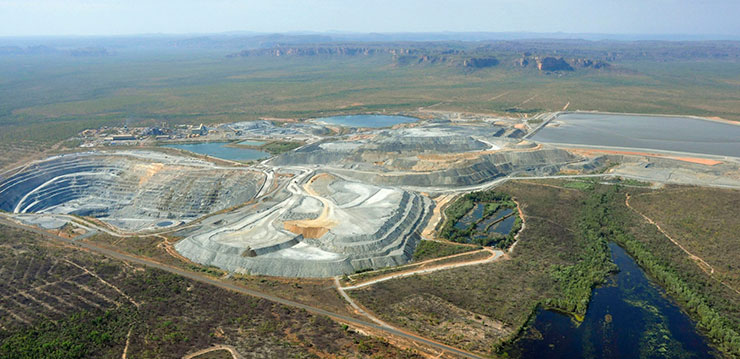
As a non-nuclear energy country, Australia is a global nut-case outlier. Especially with the newish German government recently recognising the stupidity of moving away from nuclear (Politico reports the German Chancellor Friedrich Merz recently described his nation’s nuclear phase out as a “serious strategic mistake”). Australia has plenty of nuclear scientists, thanks to our research reactor, and they work in a dazzling array of fields, but the anti-nuclear Luddites would also close that reactor.
But unfortunately, uranium is too cheap. The value of our LNG exports is typically around $60 billion. Which is more than enough to cover, all by itself, the $45 billion we spend importing petrol, diesel and jet fuel. But the value of 10,000 tonnes of uranium is less than $2 billion. As a decarbonisation option, uranium is brilliant. But it is so amazingly cheap, that it isn’t going to magically provide us with US dollars to buy oil. That has to be earned elsewhere.
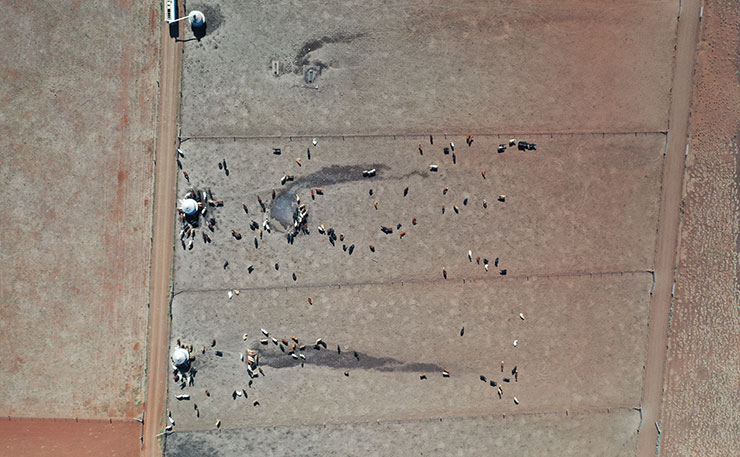
And, in case you are wondering, our beef exports don’t cover our fuel imports either. Red meat as a whole is a $25 billion earner. And people pay for it in US dollars. That’s important. In contrast, the live export business is about $1 billion on top of that. That explains why the Government has agreed to dump the live export (of sheep) trade but will fight tooth and nail to support the red meat sector in general.
Red and processed meats cause bowel cancer. So why wouldn’t the Government want to replace it with a healthier plant-based alternative? It’s still all about the money. Bowel cancer costs about $2 billion a year to treat; patients pay only a few percent of this. So our Government and population all seem perfectly happy to tolerate 14,000 bowel cancers a year to support a $25 billion export industry (see Appendix below).
It’s the smoking story all over again. It took decades for Governments to clamp down on smoking. Even after the health impacts were clear, smoking was almost certainly revenue positive. It kills people before they hit their peak years of ill-health, where they are extremely expensive to look after. Between that and the taxes, it was hard to convince Governments to take action. As more and more diseases were linked to smoking, the argument to ban it eventually became overwhelming.
Then there’s the methane from the red meat industries, which generates more climate warming than the coal we burn locally (see Appendix below). But following the money provides a simple explanation why our governments, both Coalition and ALP, continue to back coal, LNG, and red meat.
Over the past 50 years, we have dumped smelters, refineries, and our auto industry using the simple argument that they were uneconomic. It’s cheaper to send coal and cattle meat overseas, and buy what we want.
The net result? We’ve locked ourselves into supporting climate-warming and carcinogenic industries.
Appendix: animal agriculture emissions
The statement about red meat industries generating more warming than the coal we burn locally is easily proved using Australia’s 2025 submission to the United Nations Framework Convention on Climate Change (UNFCCC).
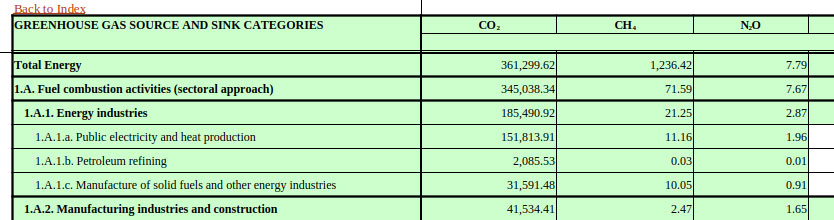
What is the carbon dioxide emissions from fossil fuelled electricity generation in Australia? 152 million tonnes/yr (Table 1).
Total agricultural methane production? 2.36 million tonnes (99% is from animal agriculture) (Table 3).
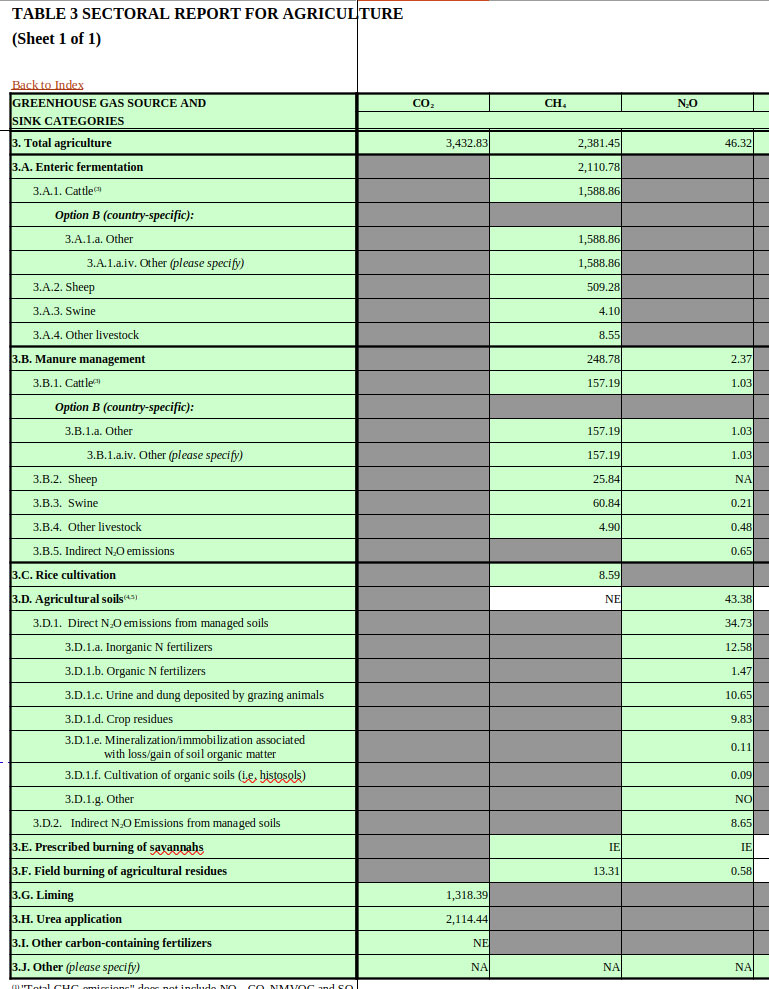
Australia has signed the Global Methane Pledge… which puts the impact of a tonne of methane during the next 20 years as 80 times that of a tonne of carbon dioxide: 2.36 x 80 = 189
189 is greater than 152, which means that animal agriculture will have a bigger warming impact over the next 20 years than all our coal (and gas) power plants.
And that’s before you add in the climate impacts of land clearing and land re-clearing.
Appendix: Bowel cancers and red meat
How many of Australia’s 14,000 bowel cancer cases are attributable to red and processed meat? Back in 2009, I published a quote from an email I received from Professor Graham Giles:
“In this modelling process, reducing the average population consumption of red meat to only one serve a week gave a PAF of 48% which would translate to about 6,000 incident cases of CRC, while reducing average population consumption to four serves a week produce a PAF of 12%, or 1,500 new cases.” – Professor Graham Giles, Cancer Council Victoria
Dietician Rosemary Stanton had heard Giles talk about this at a Seminar funded by Meat and Livestock Australia. PAF is Population Attributable Fraction… the percent of bowel cancer cases attributed to red meat. He is saying that reducing red meat consumption to 1 serve a week would reduce bowel cancers by about 6,000 annually.
Note that Giles’ group didn’t model “no red meat’’ or the combined impact of red and processed meat. The unravelling of exactly how many bowel cancers red meat causes is complex in Australia, because we don’t have much of a control group; virtually everybody grows up with the stuff and bowel cancers can take decades to develop from a few aberrant cells into a full malignancy.
You could become vegan at 30 and get bowel cancer at 45 or even 50 from your prior exposure. In populations eating little or no red meat where the diet changes abruptly, you can see the impacts more clearly. With little or no red meat, bowel cancer is a relatively low-risk cancer. Japan is the litmus test.
Bowel cancers in Japan used to run at about 20,000 per annum in the 1970s. This base rate is mostly down to two groups of people who are genetically predisposed to the cancer: Lynch syndrome and Familial Adenomatous Polyposis (FAP).
Dietary changes introduced more red and processed meat into the Japanese diet, and the result has been a massive surge. The rate seems to have plateaued and is running at some 148,000 bowel cancers per annum in 2020. Think about that… 20,000 to 148,000… every single year.
Donate To New Matilda
New Matilda is a small, independent media outlet. We survive through reader contributions, and never losing a lawsuit. If you got something from this article, giving something back helps us to continue speaking truth to power. Every little bit counts.