Does capitalism limit our freedom, not by restricting our choices, but by restricting our capacity to take responsibility, asks Yuki Lindley.
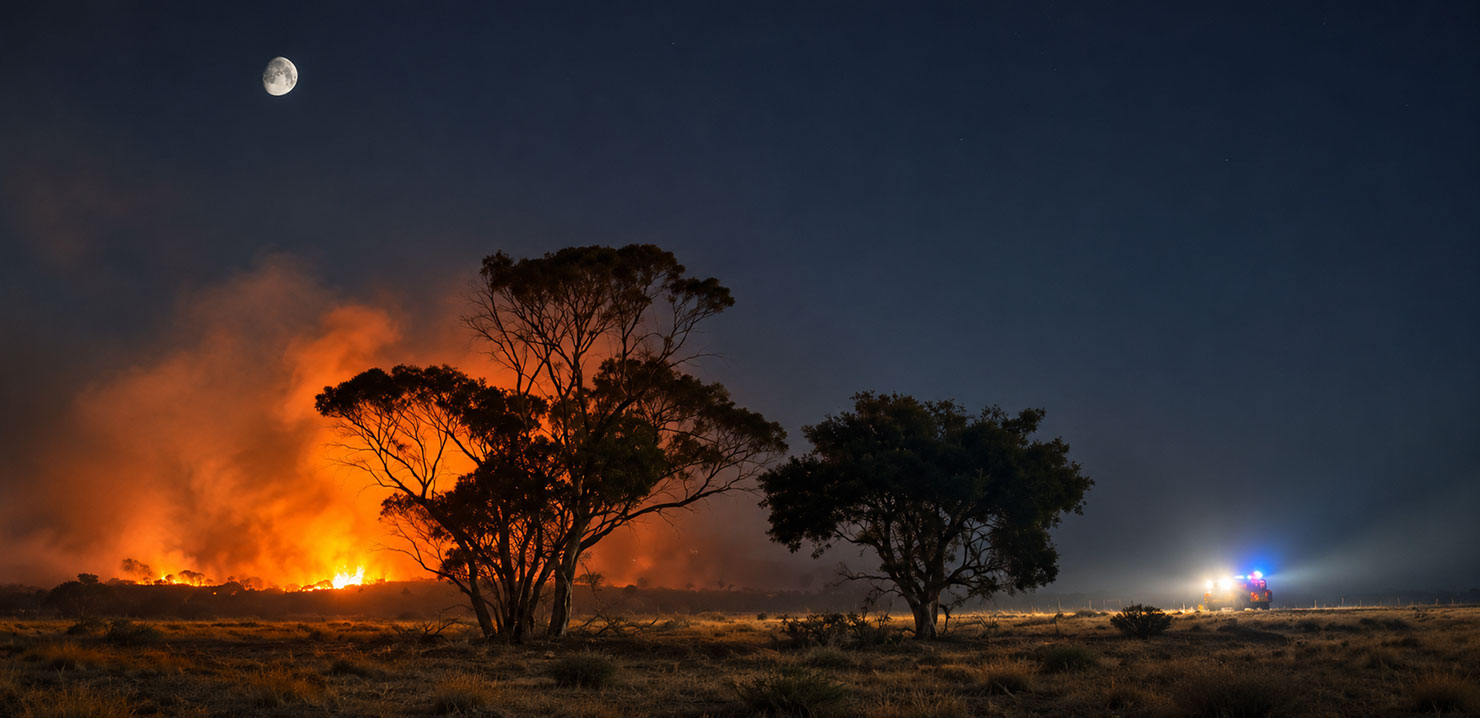
No-one would choose planetary collapse. Yet, here we are, at the 31st United Nations Climate Change Conference, as our planet undergoes environmental changes on a scale not seen in more than 10,000 years. What comes next will be uncharted territory, but the natural world is already revealing what a collapsing climate will look like.
Raging forest fires and heat waves across Europe, the catastrophic impacts of heavy rain and melting glaciers in Nepal, and the rainforests of Borneo burning for months, covering all life in a thick haze of toxic smoke.

It has been said that climate change represents the greatest of all market failures – the unintended consequences of global capitalism and its market logic. In Free Gifts: Capitalism and the Politics of Nature, Alyssa Battistoni argues that this gap between our intentions and the consequences of our actions represents an existential loss of freedom.
To understand why, we must first turn to Marx and how capitalism organises our social relations. That is, how we relate to one another and the natural world. Central to classical liberal economic thought is the idea that individuals acting in their own self-interest collectively make decisions which are reflected by the market.
No-one is responsible for the consequences of their actions under this model, because each enters ‘freely’ into the arrangement, both selling their own labour and purchasing commodities as they see fit. Thus, central to capitalist logic is the abdication of responsibility towards those the market puts us in relations with, including the natural world.
‘Commodity fetishism’ helps explain how this operates. ‘Commodity fetishism’ is the concept Marx used to explain how the goods and services we buy come to stand in for and obscure the social relations required to produce the commodity.
The iPhone becomes just an iPhone, with the exploitative social relations required to produce it abstracted away. This feature of capitalism lets us consume freely, in self-interested ways and without moral responsibility, because, in theory, everyone is freely participating and so the market simply reflects our collective choices.
However, no one has genuinely chosen to support the destruction of our natural world nor the dire conditions of children mining rare earth minerals; we have simply bought a smartphone.

In this way, capitalism organises how we relate to others and the natural world, giving us mere consumer choices in place of real power to determine how the market assigns value.
Sartre’s idea of ‘seriality’ is useful in understanding this process.
Seriality describes how individuals, with their own individual needs, are brought together by shared circumstances, thus forming a ‘series’ whose members occupy a similar social situation, but do not necessarily see themselves as a unified group.
For example, people waiting at a bus stop. Each has their own particular reasons for catching the bus, but they all have a common desire to get on the bus, and this organises how they interact with each other. Each person sees the others as potential obstacles, competitors or simply strangers. They do not necessarily communicate with each other or understand themselves as a group. Indeed, one stranger could easily be replaced by another stranger, with no change to the social situation.
Capitalism similarly organises us; we are connected by our shared circumstances within the market, but we do not necessarily see ourselves as part of a group. We experience ourselves as passive participants in an existing arrangement, rather than consciously organising ourselves to transform the situation.
The market sets the conditions for how we relate to one another and the natural world, and we feel unable to change how it operates; our choices become limited to how we individually interact with the market.
Another way to understand the constraints capitalism places on our real choices is through the ‘tragedy of the commons’. It’s an idea popularised by Garrett Hardin, who argued for the need to regulate or restrict access to shared resources, because when individuals have free access to common resources they are motivated to overexploit that resource to the detriment of the community.
Hardin uses examples such as fisheries or herders grazing common land to illustrate his point. Each herder has a motivation to graze more cattle so that they may sell the additional cattle at market. However, if all the herders take this action, their meadow will become overgrazed to the detriment of all.
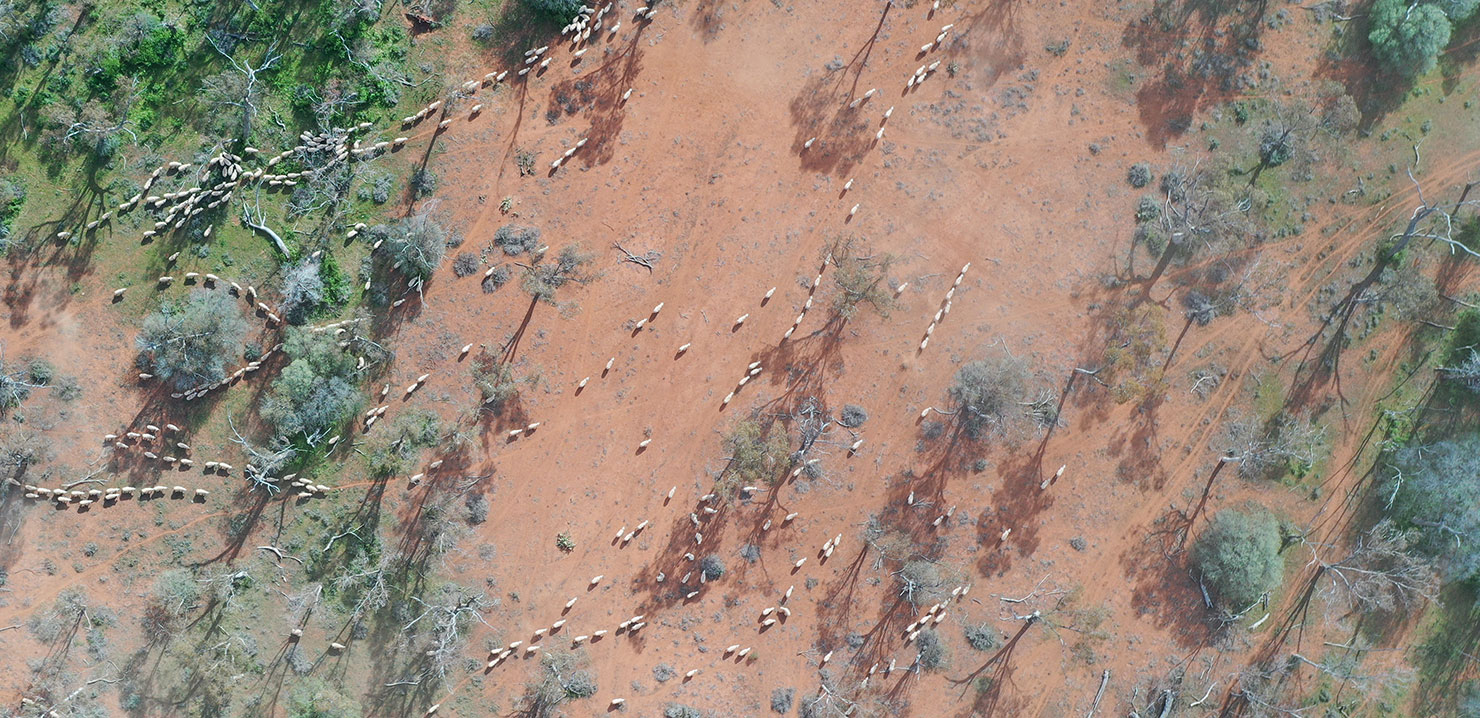
The ‘tragedy of the commons’ is still used today to help explain environmental destruction and climate change, with many arguing for the need to privatise the commons, incorporate the commons into the market system so that it has economic value, or regulate the commons through state apparatus.
However, what the ‘tragedy of the commons’ reveals is not that humans are inherently unable to manage common spaces for mutual benefit; indeed, for much of human history we have managed to do so quite well. Rather, under the logic of capitalism, the drive to ‘graze more cattle’, to increase one’s profit, creates the conditions for the commons to be overexploited to the detriment of all. Thus, it is capitalism which limits the herder’s freedom to manage the commons in ways that benefit everyone.
If capitalism sets us up to fail in our capacity to cooperate and act responsibly towards each other and the natural world, how might we strive for freedom and human agency under these constraints?
Battistoni draws upon the existentialist thinkers Jean-Paul Sartre and Simone de Beauvoir, who were also struggling to understand how freedom and responsibility could function under the constraints of fascism.
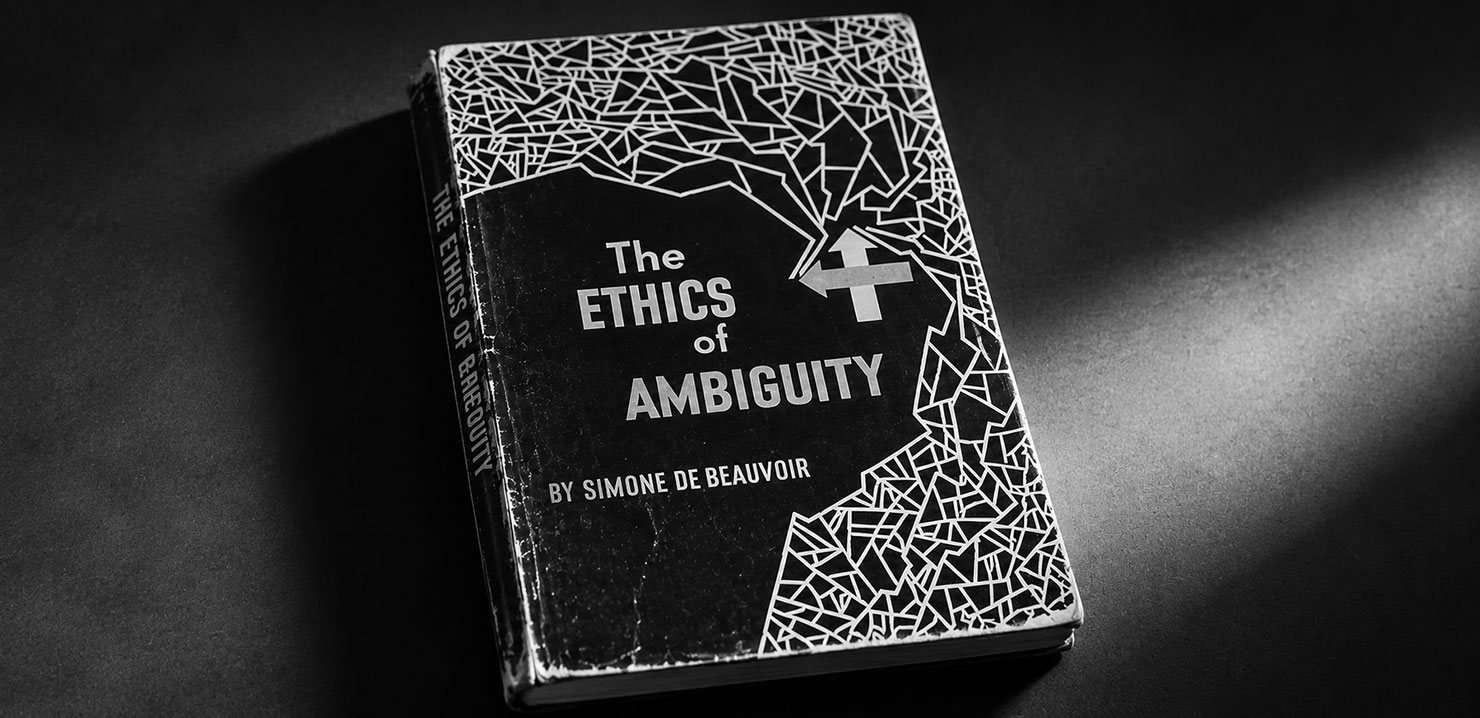
Both, in their own way, were trying to locate human freedom, responsibility and choice during times of crisis. But it is de Beauvoir’s notion of ‘ambiguity’, which she develops in The Ethics of Ambiguity, that Battistoni finds most useful.
De Beauvoir describes a vision of freedom that emerges through the constant struggle to act freely, and in accordance with our values, under the constraints of our material circumstances and social position. She argues for a freedom that does not exist in some utopian future, but in the ambiguity of the process itself: in the striving to act freely with moral responsibility during challenging times, when there are real constraints on our freedom.
De Beauvoir’s conception of freedom lies in stark contrast to the idea of freedom we’ve been sold. Under capitalism, freedom is seen as that which comes after our basic needs are met. We see freedom as connected to consumption; when we are free, we have more time to consume the things we enjoy – travel, restaurants, and consumer goods.
Human freedom comes to be placed in opposition to the limits imposed by the natural world, so that placing limits on our consumption becomes seen as constraining our freedom. But we would need four more Earths for everyone to achieve Western levels of consumption, so it’s clear we need a much better notion of freedom.
Capitalism constrains freedom through endless consumer choices, while the social and environmental relations those choices embody remain unassailable. It rests on the principle that no one is responsible, because the market provides what we collectively desire.
However, in societies that highly valued human freedom and agency, such as the Blackfoot (Siksika) Nation, we see that central to realising freedom is the principle that we are all responsible.
They built systems where collective decision-making was the foundation upon which freedom could be realised. They understood freedom as inherent, not something we needed to achieve, and believed providing for people’s basic needs was a collective responsibility, not an individual’s. Thus, freedom was located in responsibility, and in acting in good relations with each other and the more-than-human world.
The climate crisis reveals just how unfree we have become under the logics of capitalism. Being freed from our responsibilities, we have become unfree in the most profound way. We have endless choices in front of us, but feel unable to make decisions that shape our world. We are like the people waiting for the bus, connected by shared circumstances, but feeling separate from one another, seeing ourselves only as individuals responding to our situation rather than as a group actively shaping it.
But imagine the bus doesn’t arrive; what then happens to the strangers, who are now alert to the problem and begin to speak with one another? Recognising their shared situation, they start to organise alternative modes of transport. They begin to shift from a ‘series’ to what Sartre calls a ‘group in fusion’. Rather than simply sharing circumstances, they begin to act collectively to change their circumstances.
If freedom is located in collective responsibility, and our current global economic system is based on the abdication of responsibility, how might we imagine alternatives built on this view of freedom? How do we democratise global economic systems, so they represent the interests of all?
To dismantle the unequal power relations embedded in today’s economic rules and institutions, we need to ensure genuine participation for all, building social relations based on shared responsibility. We need to think beyond putting a price on the natural world so it can be incorporated into capitalist systems, and instead consider how to create conditions where we are free to act cooperatively to secure the world we want.
Like the herders grazing common land, we must first free ourselves from the constraints capitalism places on our ability to act cooperatively for the benefit of all.
Donate To New Matilda
New Matilda is a small, independent media outlet. We survive through reader contributions, and never losing a lawsuit. If you got something from this article, giving something back helps us to continue speaking truth to power. Every little bit counts.