
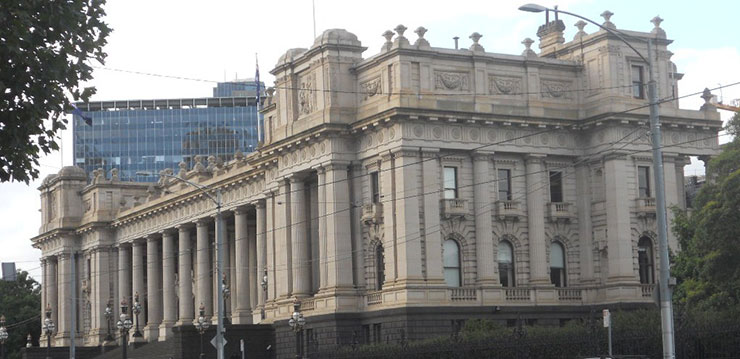
Australia’s halls of power don’t look all that different to the halls of our private school’s across town in high-flying electorates. Rachel Payne MP – a self-described ‘cat lady’ and ‘weed smoker’ from the industrial city of Newcastle, wonders aloud why that is.
I have been a Member of the Victorian Parliament for almost four years and there’s one word that is conspicuously absent in the chamber – class.
While we are increasingly cognizant in politics of representation across a range of identity markers and lived circumstances, class background remains, at best, the elephant in the room, and at worst, something actively dismissed or even lampooned. Talk of class is routinely met with accusations of class war (I wish!) or denial that Australia even has a class system.
We love an Aussie Battler, but only really in theory and somewhere else. My wish is that less politicians talked about Australians who are doing it tough and more people doing it tough were brought into the tent.
There are obvious political and social reasons for class being a dirty word in Australia.
Anything vaguely related to socialism has been kryptonite since the collapse of the Soviet Union and again, Australia’s central and founding myth is that we are all equal – in status and opportunity.
Then there’s the difficulty of pinning class down. When we have plumbers earning more than teachers and Clive Palmer appealing to Battlers, defining class is beyond blurry. But we also know that people who have less money – and social capital – are woefully underrepresented in politics.
Parliament and the commentariat are dominated by those with private school educations and financial safety nets. Perhaps the discomfort with saying this out loud is because saying it makes it too real (the lack of working-class voices in Parliament is conspicuous and shameful) or worse, perhaps those with class privilege don’t see their privilege at all. Either way, I am shouting it from my Monaro: we do not need any more trust fund kids in politics.
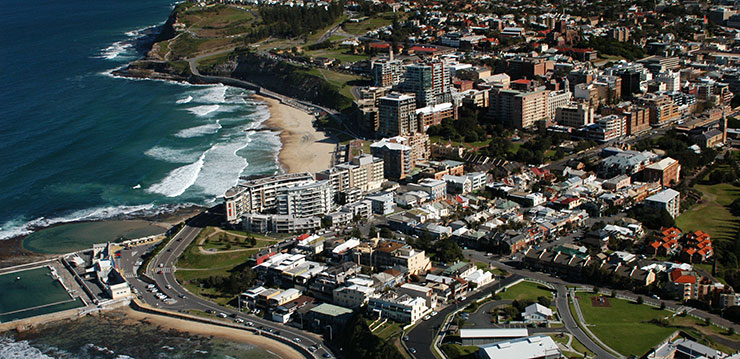
I come from a working-class family in Newcastle. I left home at 16 and had to navigate life on my own. This means I have experienced financial hardship and had to manage services such as Centrelink. I put myself through university and went on later to actually work for services like Centrelink and the Family Court.
I also toured the world as a Burlesque dancer and was CEO of the Eros Association – Australia’s peak body for the adult industry. I am now an MP and on a comfortable salary, albeit in a modest suburb.
This mix of life, financial circumstances and work experience is uncommon in detail (I don’t know many CEO’s who once stripped in Paris), but it’s actually pretty standard amongst my working-class peers – we were all “pivoting” well before Covid to simply get by.
These experiences form the lens through which I see all policy ideas, motions, and laws that come across my desk.
My class background makes me a better MP.
I am loath to use the over-egged phrase ‘lived experience’ but it genuinely does matter. Issues like the cost-of-living, the housing crisis and wages and conditions are not theoretical to me, and this makes my perspective as a lawmaker and shaper more robust.
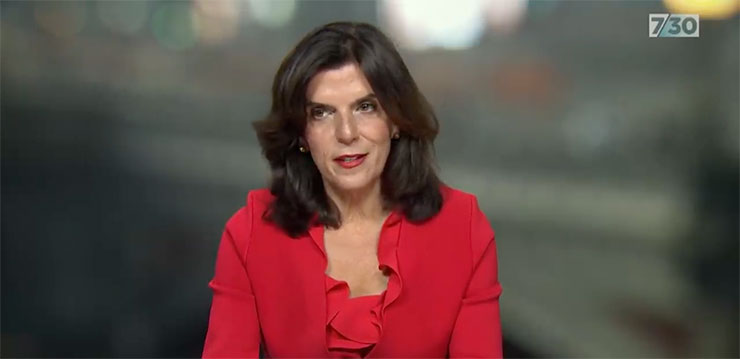
You may recall a few years ago when Liberal MP Julia Banks claimed she could live on the Newstart allowance (now Jobseeker) of approximately $40 a day. I recall thinking, “Our travel allowance is more than that PER MEAL, Julia! You would not survive a work trip, let alone a week!”.
To be honest, it does not even warrant discussion; it’s so absurd. I am a better MP because I know how far that $40 a day must stretch. And not just stretch, but the stress that comes with that stretching. The tradeoffs between bills, housing, food, medicine, your kids’ school camp – the mental gymnastics is constant when money is tight. And I’m not sure you can really appreciate that until you have lived it.
My class background is one of the reasons I am most suited to being a crossbencher.
We take on the issues that the major parties shy away from. Sometimes – often in fact – they support the issues, but they do not have the courage or will to tackle them. And they are insulated. Their communities and families are safe from the consequences of their decisions and laws.
For example, I am passionate about Waste to Energy. I won’t bore you with the details (it is literal rubbish), but so-called Waste to Energy incinerators are being built in mine and other electorates. Rubbish is being trucked in from all over Victoria, dumped in our backyard, and burned. The science is out on the health and environmental effects of these incinerators (many are being closed and/or banned in other states and countries) but one thing I can tell you for sure is that there are none being built in Brighton, Mossman Park or Dalkeith.
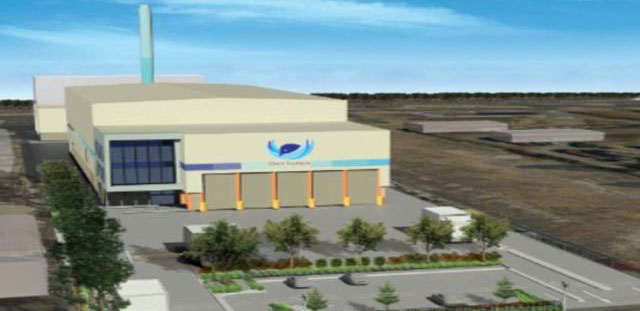
In my state of Victoria, multiple mass incinerators are being built in outer-suburbs with low socio-economic profiles – what is known as a burning ring of fire. I assure you, when an incinerator is being proposed in a wealthy electorate (or even a marginal seat) no-one is saying they’re safe, efficient, and perfectly fine. Let’s speak plainly: the rubbish of the rich is being trucked to poorer areas to be burned. The effects on air quality, the water table, and local residents are out of sight, out of mind. Sometimes, an issue has to be right in your backyard for you to really give a shit. (Yes, I swear too – I have a Master’s in Public Policy but that’s how we talk where I’m from!)
Class is also the reason I joined the Legalise Cannabis Party. Yes, I am a cannabis consumer, but more than that, weed is a working-class drug. We know from the renowned Penington Institute that most drug arrests in Australia are for cannabis (not for cocaine or meth) and, the people being arrested are overwhelmingly from minority groups – Indigenous kids, the LGBTQIA+ community and yes, working class and poor people.
We all know someone who has been stopped and searched for essentially “looking rough” only to be cleared, but carrying a joint or two. The intent was never to search for weed, but hey, it will do! Next minute they’re in handcuffs.
While one of the fastest growing groups of cannabis consumers is older people (50+) (for pain, sleep and relaxation) they are not getting arrested. If you drive a nice middle-class mum-taxi in the suburbs, you’re very unlikely to be pulled over for a “random” drug test, and you’re almost certainly not going to be stopped and searched in the CBD. Tradies lose their licenses, kids are in the lock-up, parents are losing custody of kids. Weed law reform is a working-class issue.
One of the most interesting parts of being an MP is that, naturally, I talk to other politicians of all political leanings. I can assure you that while I am one of a few MPs who publicly admits to cannabis consumption, I am certainly not the only cannabis consumer.
I get questions around the water-cooler and in the halls of Parliament like “Can I drive after my gummy?” and “Where do you get yours from”? I have even had the mind-bending experience of knowing MPs who consume cannabis regularly, but publicly advocate against law reform.
I won’t name names, but suffice to say both our Premier and Prime Minister have admitted to cannabis use and yet neither of them has the courage to decriminalise – let alone legalise – our beloved herb. Albo is a housing commission kid; I wish I could ask him why he’s so content with locking our people up and, whether he really thinks it’s the right thing to do.
Finally, the legal prohibition of cannabis is a waste of time and money. All sensible people – including MPs – know this. It fuels a dangerous illicit market, brings consumers into regular contact with organised crime, wastes billions of dollars of taxpayer’s money on prisons and police and, ruins lives.
Meanwhile, cannabis can be life-changing for many people with chronic health conditions and, I would argue, a much better alternative to alcohol for socialising – I don’t know about you, but I have never been to a party of weed smokers and been worried about being King Hit.
Either way, prohibition of cannabis for self-determined adults has been an epic failure.
Working class voices are important.
Lived experiences are important.
There was a time when I felt pressure to round out my vowels and watch my P’s and Q’s but now, I embrace it all. I like to call a spade a spade and to pierce through that veneer of civility – and hypocrisy – that I sometimes see amongst the privileged.
I’m calling out the kind of person who has a wine cellar and enjoys a $30 cocktail but rails against a single mum having a joint on a Friday night. Access to money matters. Culture matters. And I for one will keep saying the C-words whenever I can: class and cannabis.
Donate To New Matilda
New Matilda is a small, independent media outlet. We survive through reader contributions, and never losing a lawsuit. If you got something from this article, giving something back helps us to continue speaking truth to power. Every little bit counts.