climate change
24 Sep 2008
Rudd Backs the Wrong Horse on Coal
In his speech to the UN, Kevin Rudd will commit $100 million trying to make clean coal work, in the hope that other countries will follow suit. But his plan is useless, damaging and risky
In one of those perfect ironies, Prime Minister Rudd's announcement of his $100 million push to make Australia the global coal hub last Friday came on the same day that yet another so-called "clean coal" project, Santos' Fairview operation in Queensland, was scrapped.The Fairview collapse "was to do with getting the funding balance right", according to a Santos spokesperson quoted in the Australian Financial Review last Friday. That, of course, is code for "we want more money from governments", tactfully argued by a company whose last half-year profits were $304 million and whose project has already been handed $75 million in taxpayer funds.
The Fairview collapse echoed the failure early this year of the global pin-up for coal geosequestration, FutureGen in the United States. FutureGen, which the Howard government had invested in, alongside various other governments and coal multinationals, fell over after the Bush Administration decided it was too far over budget and behind time to justify continued funding.
Of course, taxpayers in Australia, the US and elsewhere, would be entitled to ask why they should pay at all for cleaning up the act of an industry that has made many billions of dollars in profits out of polluting our planet for more than two centuries. BHP Billiton made a record US$15 billion last year and Rio Tinto US$7.4 billion. If these corporate giants were interested in cleaning up their act, they would pay for it out of their mammoth profits. It is both bad economic policy and a direct breach of the polluter pays principle to spend taxpayers' money doing their job for them.
The question of who should pay for developing geosequestration technology, however, is only one of the issues that the Rudd Government has ignored as it does everything it can to make sure the coal industry is not left out of pocket. Despite a host of unanswered technical and legal questions, Rudd Government ministers rarely (if ever) mention climate change without making sure to point out that the coal sector has never had a better friend.
By supporting these so-called "clean coal" projects with funding, the Rudd Government is delaying recognition of just how limited their real-world usefulness actually is. It was not funding issues, for instance, that knocked over Hydrogen Energy inWA, a major joint venture between Rio Tinto and BP. It was the small fact, somehow overlooked in the initial work that they trumpeted around the world last year, that the geological formation off Perth that they were planning to fill with carbon had a large hole in it.
This exposes a key technical problem that is starting to worry even some inside the coal sector itself: where can you find enough safe storage space to bury permanently the vast quantities of carbon dioxide that our coal power plants pump out every year?
Australia's coal power emissions alone would require permanent safe storage more than 2500 times the size of the storage trial started recently in the Otways — 250 million tonnes every year. According to Shell, a full system to transport carbon captured from the world's power stations to storage would mean moving twice the volume of the entire current global gas industry.
The larger the amount of storage and transport, the more likely it is that corners will be cut, second-rate storage used, and leakage will occur.
Leakage on any scale, of course, defeats the whole purpose of the exercise. Billions of dollars would have been spent capturing, transporting and storing carbon dioxide for nothing. But, in addition, leakage also brings the liability monster bubbling to the surface.
The coal corporations are following in the footsteps of the nuclear industry, telling governments that no progress will be made until they are absolved of any liability in case stored carbon leaks. In other words — yet again — they want to privatise the profits and socialise the risk.
Following the bailouts of Fannie Mae, Freddie Mac, Northern Rock and others caught up in the sub-prime crisis, where government have been forced to carry the can for failed capitalist enterprises, one might have thought that governments would be reluctant to set themselves up for a similar fall with geosequestration.
However, the Rudd Government has conspicuously failed to deal with the issue of liability before committing many hundreds of millions of dollars to another industry with an even higher chance of failure. The regulatory framework that the Government currently has before Parliament squibs on the issue, leaving open the question of who will carry liability after a storage site is closed.
The Government's support for coal and geosequestration goes hand in glove with its position that Australia can get away with high emissions for decades into the future.
The fatal flaw of coal, even with ideal geosequestration efficiency, is that it will always emit some carbon dioxide — and that amount won't be less than 10 per cent of current coal. The deeper the emissions cuts you need to achieve, the less relevant carbon capture becomes. In a world where we only needed to reduce emissions marginally over a long time — say 60 per cent by 2050, as is the Government's aim — geosequestration might be an option. But that isn't our world.
The science is clear that we are already entering the zone of dangerous climate change, and that minimising the risk of catastrophic, runaway change means heading for net zero emissions as soon as feasible.
In our real world, we need zero emissions energy sources, and we need them fast. Coal with geosequestration doesn't fit the bill.
It's hard to see how this plan of the Government's is actually going to amount to anything. When we have had no more success than anyone else in the world, why is the Government throwing $100 million each year at a making Australia a global hub for technical and legal knowledge on coal? Will the world really come to us for advice when our projects are falling over? Will governments be inspired by our legal expertise when we have failed to even address the largest regulatory issue facing the industry?
Surely it would have been better to invest that money into bringing home our world-leading solar scientists — the Australians who have fled to Germany, China and the USA in recent years to get the support they deserve and the situation demands?
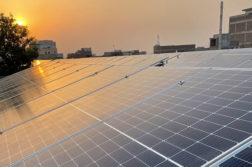
As one of the world's sunniest countries, we should be making Australia the global solar hub, the Saudi Arabia of solar, demonstrating baseload solar thermal power, the world's most efficient solar cells, solar water heating and the best possible regulatory measures to roll out all those alternatives.
Instead of giving us that inspiring vision, Rudd is responding to growing economic and environmental uncertainty by deepening Australia's vulnerability to those problems. This "clean coal" funding is simply throwing more money at a solution which does nothing except make it seem acceptable for us to keep mining huge amounts of coal.
Rudd's research institute is unlikely to produce any real results — wasting money that could be far better spent on truly clean renewable energy and energy efficiency alternatives — technologies that have already leapfrogged clean coal's "best case" scenario, and actually work.


Delicious
Digg
StumbleUpon
Reddit
Newsvine
Facebook
Kwoff


Discuss this article
To participate in the discussion Sign in or Register
Christine,
Fantastic and accurate article. The major parties in Australia just dont get it do they?
Carbon sequestration seems really impractical to me. Does Kevin understand it, I wonder?
I agree, that for a country like Australia, and indeed any country with vast amounts of money to invest, to not give the cleanest energy sources vast amounts of development funding to improve their viability is mistake.
If reducing CO2 emissions were to be treated like the space race, these problems could surely be fixed.
But this is my major argument against being dismissive of ‘fixer’ technologies like clean coal, and indeed nuclear power.
It is a political and social reality, that citizens of western countries wont ever submit to living in an society without reliable baseline power. Even if and when the technology becomes available to provide baseline power from clean sources, it will take time to switch over the infrastructure.
And this is my question, if clean coal, or indeed nuclear, is developed alongside clean technology, could not that be used to reduce CO2 emissions, and save our asses, in the literally 10-15 years it would take to change over baseline power supply generation infrastructure? Throw developing countries into the equation, it’ll be more like 20-25.
I don’t actually know the answer to that question. But I don’t think anyone does. So by all means, advocate for clean technology investment on a large scale, but perhaps not so targeted against clean coal. After all, there are many that say, if you want to talk about funding on a dollar invested here means a dollar not invested somewhere else, than we should forget about global warming and cure malaria world wide.
Having read Ian Lowe’s article, I am worried that Rudd is getting sucked in by the coal lobby. On the other hand, when you think about China it is hard to see how they are going to stop using coal in the near future.
China is indeed the acid test for carbon capture and storage (CCS). As Senator Milne rightly points out, arguing strongly against the technology are the scale of storage required worldwide, the unresolved risk of impacts and related liability from leakage, the timeline for implementation, the partial efficacy, and the false allure of perpetuating profits from a dirty fossil fuel, especially in the face of workable renewable technologies.
So what, then, is the game plan for China, which is rapidly commissioning new coal-fired plants and has many in the pipeline? Might not CCS serve as an intermediate step to buy us time as renewables are ramped up?
While the current failures of CCS appear many, Larvatus Prodeo considers a new small-scale working CCS plant in eastern Germany. If that technology can be scaled up, might it not be of use in places like China?
The challenge, of course, would be to maximise CCS for legacy coal-fired power stations without impeding the adoption of renewables. This is, of course, a big ask given the coal lobby and people like Martin Ferguson, who think more in terms of preserving foreign markets for coal than what might be best for the environment and preventing dangerous global warming.
As I have argued at LP, the mindset should be CCS as a transitional measure to counter emissions from power stations that will stay online as massive investment drives the development of renewables. In this regard, CCS might also be considered for gas, which produces substantially fewer emissions per unit of energy (i.e. it has a lower carbon intensity) and could be considered as another transition option.
Finally, if CCS is going to be considered, there needs to be more spent on research than a piddling $100 million - especially when one considers the $150 million of state and federal funds being pumped into a single new power station in Victoria’s LaTrobe Valley. However, given its profits and contribution to the problem, the coal industry must pay for the research, and Australia must make no further investments in coal-fired power. Nor should the coal industry be compensated via the forthcoming ETS.
To achieve the emissions reductions science shows we need, fossil fuels must be completely replaced by renewables. CCS just might be part of the plan to phase fossil fuels out, not perpetuate their use for the sake of preserving our coal markets. Let’s hope the transition to renewable energy is a quick one, and that renewable energy receives the scale of investment it deserves.
Darren Lewin-Hill
http://northcote-independent.blogspot.com
China is already seriously polluted, when they start to get the kind of smog that happened in London in the late 1950s they will start to restrict the use of coal. If the alternatives are also comparatively cheaper (because coal is carrying a high carbon tag) they will change with a speed that can only occur in a command economy. We (sorry - the government) needs only to act rationally and insure the future by putting the money into the new renewables.
Unfortunately we seem to be lumbered with semi-literate pollies with degrees in tunnel vision.
Get in there and give it the full of the pipe, Christine! I agree with just about everything included in the article, easpecially about the potential for solar power not just for Australia, but it could even, one day, benefit the whole of the South Pacific.
Funnily enough, I seem to remember writing something along those very same lines a few weeks ago in response to another article (I think it may have been about Russia); it’s good to see that some politicians do check out the New Matilda website from top to toe. Hellfire, you’ve even got foreigners like me whacking in a response every now and then!
The use of clean coal is a non-starter; it’s economically unviable, will both the taxpayer and the environment, and anyway, let’s face it, there is no such thing as "clean" coal.
It may also be of interest to subsidise small-scale wind and solar installations in some of the South Pacific nations; I think that organising a giant solar farm, most probably, in Western Australia, plus wind and solar plants in Fiji, Papua New Guinea, the Solomon Islands, Tonga and Nauru, to name but five SPNs, would still be far cheaper, not to mention cost-effective, and be friendlier to the environment, in the long run than having to rely on coal.
Christine, you may use my ideas any time you like. Please acknowledge your sources next time, chicken!
:-)
**this comment has been edited
Tim Flannery is now promoting coal. He is nobody’s chicken, so what to make of that?
KL Bedford
Both the NSW and Quieensland Government are not only backing coal but also speeding up how much we export. It is the vast quantity that we export that is the problem. The Queensland Government also stepped in and changed the Mineral Resources Act to assist Xtrata to increase its exports. They and the industry itself are all going hell bent to get as much coal out of the ground and onto ships as they can with no thought of the impact that this will have on climate change. We are already the largest exporter of coal in the world and these people are aiming to double that. This is a nice example to the world when we are also the worst generators of CO2 in the world per capita and the driest inhabited continent. Why should any other nation take any notice of wht we do or say under these circumstances?
KL Bedford
Current wisdom is an hysteria that markets will always provide the right result , yet we have a PM setting Industry policy ad hoc in ignorance of what those market forces are actually doing .
Real examples that with $175 million of government backing would produce significant baseload within 10 years or less :
http://www.geodynamics.com.au/IRM/content/home.html
technology that works the only irony being that the initial generator will be used to supply power to a uranium mine.
http://www.solarsystems.com.au/
A test plant at Bridgewater near Bendigo nearly completed , technology that works.
Discuss the nonsense of clean coal and uranium all you like , but times have moved on , pioneering companies have developed the technologies we need for the future , wouldn’t it be more constructive to turn the spotlight on the future , well and truly cutting the ground out from under the PM.
And what if the computer models are wrong (and so far they are, look at www.trac.org.au/images/temps.gif) then we have just wasted $100m. At least investing $100m in renewable technology research is a double bet. When it finally dawns on the community that they have been conned by a less than a dozen or so climatologists who program the computer models we will still have technology for when the oil and coal run out.
But like most things the Greens do Milne’s diatribe has no real basis in reality. Stupid ignorant comments like: "The science is clear that we are already entering the zone of dangerous climate change" …. "minimising the risk of catastrophic, runaway change"…."world’s sunniest countries" etc are typical of the Greens ideologically driven basket weaving mentality. God help us if they ever get any real power!
The impracticality of CCS is such a no brainer that I can only think of one reason,apart from terminal stupidity,why our dearly beloved leaders are so supportive of it.
That reason boils down to two words - Money and corruption.
Tim Flannery’s recent somewhat qualified support for CCS is
worrying.He has a good record on pushing for major changes to enhance sustainability.What has happened?
Well said Christine, as always.
It would be wonderful if Kevin Rudd were to invest some of that 100 million in commercial hemp production and save our forests. It would also take away our reliance on that other CO2 producer, the petroleum industry and the associated plastics that cause so much stress to our already overstressed environment.
David Leigh.
Australian expertise has led the world in many innovative clean energy technologies for decades and continues to do so. In the absence of existing large and profitable industries, the inhibiting factors have always been funds for demonstration plants large enough to convince skeptics (usually economists and others with limited future vision).
It is ludicrous that government should subsidize "Clean Coal" demonstrations for a very large and highly profitable industry while ignoring far better demonstrated AUSTRALIAN alternatives.
To support Tim Flannery, I do acknowledge the need for "Clean Coal" development, no matter how expensive or risky, because of the ubiquitous nature of the industry and its contribution to the greenhouse effect. However, that investment in R&D should come from the industry - they can well afford it! The industry must, however, have some doubts about the viability of "Clean Coal" as it has not done much R&D to date!
CSIRO SPRS (retired)
Thanks all for the comments and apologies that the Senate got in the way of responding until now.
Patman, neither you nor I have invented any of these arguments. There are many of us around the world saying the same things in different ways - which is exactly what gives me hope that we can tackle this and come out positively! For the record, however, I have not read your previous comments here or elsewhere.
LukeMR, your comment works off the incorrect assumption that renewables cannot supply baseload power - one of those myths perpetrated by the coal and uranium lobby that has little basis in reality. A single wind turbine or a single solar panel is no more able to supply baseload than a single boiler of a coal fired power plant, but no-one is suggesting any such thing. A broad mix of renewable sources can easily supply baseload, particularly since wave, tidal and geothermal power are in no way intermittent! So the prospect of using a technology which currently does not exist as a bridge to a technology which already does makes no sense.
Icedvolvo, I have no idea what you’re talking about.
Come join the conversation at http://greensblog.org
Hi Christine,
I could certainly be wrong yes.
But that is my point, are we SO sure that we can provide Chinese baseload power with renewables SO soon, that we should abandon the idea of helping to make the worlds umpteem coal plants cleaner? Luke
Surely the point is that we have no idea if the CCS technology will work and can be developed in a way that provides power at a reasonable cost comparable to solar thermal for example whereas we know that wind and solar thermal work and we know the cost. It is really going to be a problem when we have spent 10 or 15 yrs and $billion investments developing a technology that turns out to be deeply flawed and the climate meanwhile has reached the point of runaway warming and nothing else has been put in place…..
Christine Mile responded to Icedvolvo with:
"Icedvolvo, I have no idea what you’re talking about…"
Then why Ms Milne, when you admit to not understanding the most basic premise of climate change (i.e. the IPCC computer models), are you making any comment at all on this subject?
Icedvolvo, Milne didn’t say she didn’t understand the science - she clearly understands it, and vastly better than you, a climate change denialist do - she said she didn’t know what *you* were talking about.
My guess is that’s a polite way of telling you that she doesn’t have time for the few fringe dwelling individuals hanging out with the flat-earthers on the edge of reality when it comes to CC.
Better late than never to send you a wee response, Christine.. I use (or at least try to use) humour in my arguments every now and then, sometimes flippant, sometimes caustic.. and sometimes I’m just being serious.
I live many, many thousands of miles away from Australia, but I believe that what I wrote a couple of weeks ago may well be a possible solution to global warming, at least in the South Pacific/Australasian region. Keep on truckin’, Christine, you’re spot on.
Note to New Matilda’s monitors: Why did you take the Rupert Murdoch approach and decide to edit my humble comment? What was so unworthy of inclusion?